


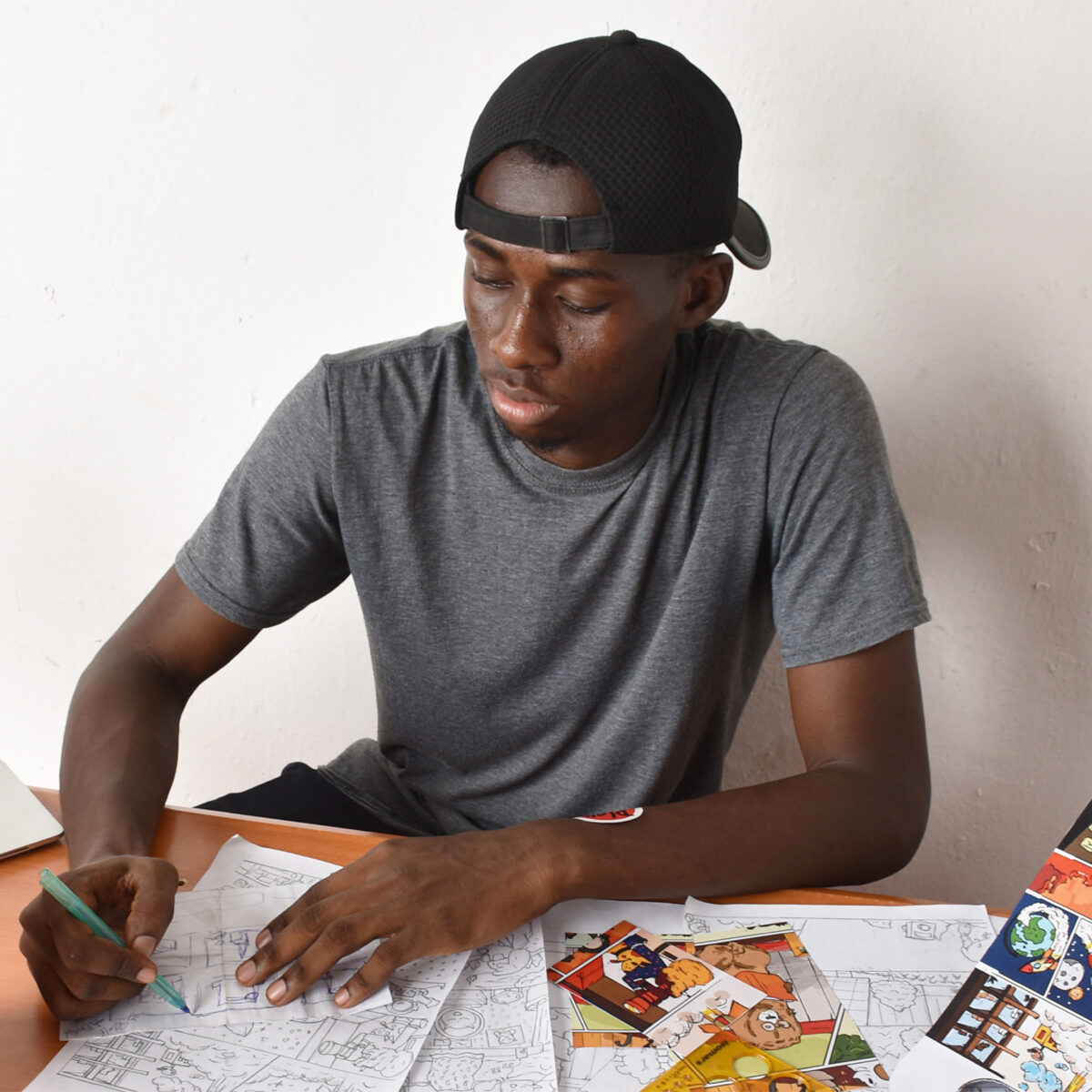
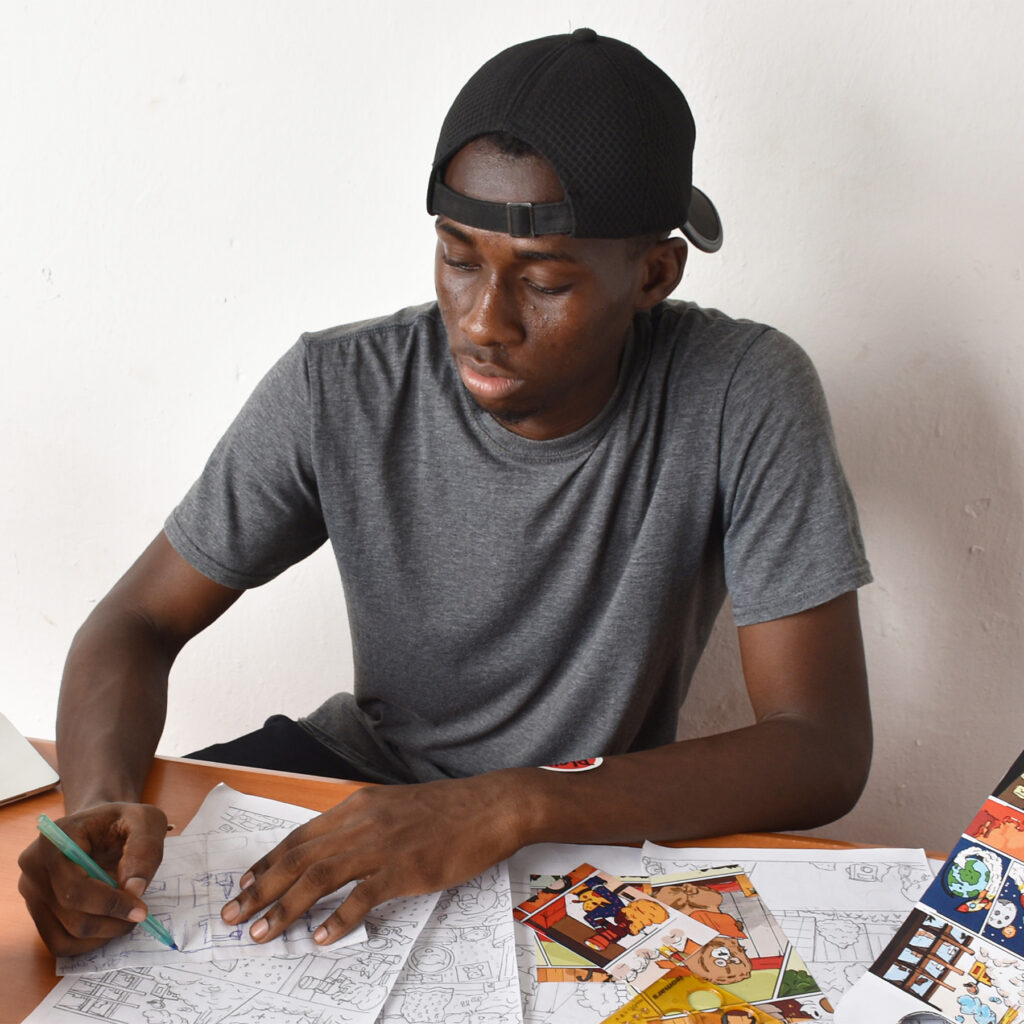
Discover the interview of Oluwatosin Samuel:
How did you become designer?
“My design journey started in a print shop in Nigeria. Right after high school, I interned there and found myself magnetized by a senior creative working in Photoshop. I was 16, with just a laptop and a torrent of curiosity. I’d sit beside him, watch, then go home and tear through tutorials, trying to recreate what I saw.
That hands-on, almost apprenticeship-style learning was my foundation. I moved from flyers to brand work, learning by doing. But looking back, the seeds were planted much earlier—I was always drawing as a kid, obsessed with the worlds and characters in cartoons. That early storytelling instinct never left; it just evolved.
I initially dreamed of game development, even writing stories and designing characters. While my path didn’t go straight into games, that passion for building immersive worlds directly fuels my focus today on spatial design—like packaging and the AR/VR space. So in a way, I’ve come full circle: from imagining worlds as a child, to building them digitally as a designer.”
How would you define your vision of design, your style?
“My style is deeply influenced by that tactile, practical start in print. I believe in design you can feel—whether it’s the texture of packaging or the intuitive flow of a digital space. It’s purposeful storytelling. I aim to create work that’s visually clean and modern, but always with a layer of narrative and tangible human experience underneath. Growing up on cartoons and character stories taught me that every good design has a personality and a role to play.”
For the future, what are your professional projects?
“My north star is bringing physical sensation into digital experience. That’s why I’m steering my practice toward the AR/VR and spatial design space. I want to build immersive experiences that blend the storytelling of my childhood game concepts with the practical, human-centered design I learned through branding and packaging.storytelling through virtual objects
What do you like the most in your job?.
It’s the moment of materialization—when an idea moves from a sketch or a story in my head into something that occupies space, whether physical or digital. That magic never gets old. It’s the same thrill I had watching a design come to life in Photoshop in that print shop, or imagining a game world as a kid. I get to build the textures of people’s experiences, and that’s an incredible privilege.”